
Moving into a new apartment before the school year starts can feel exciting right up until the boxes begin piling up. Then, suddenly, you are wondering where your student ID went and why you own three phone chargers but cannot find any of them.
A checklist helps. Not because every move will go perfectly—it probably will not—but because it keeps small tasks from turning into first-week problems. For students preparing to move into Toronto apartments, this guide covers the practical details, school essentials, and a few things that are easy to overlook when you are focused on classes, roommates, and settling in.
1. Confirm Your Move-In Information
Start with the details that affect everything else. Double-check your move-in date, arrival instructions, key pickup process, required identification, and any paperwork that must be completed beforehand. Save copies of important documents on your phone, but keep a printed copy nearby too. It may feel unnecessary until your battery is low.
If you are moving into Avant, review the Resident Resource Center and contact the property team if anything is unclear. A quick question a few days early is easier than trying to solve it beside a car full of boxes.
2. Check What the Apartment Already Includes
Before buying furniture, appliances, or storage pieces, confirm what is already provided. This is especially important for students moving from home for the first time. It is easy to buy a lamp, microwave, or large organizer and discover that you do not need it—or that it does not fit.
Review the property’s floor plans, browse the virtual tours, and look through the amenities before finishing your shopping list. I think this is one of the simplest ways to avoid overspending. It also gives you a more realistic sense of the available space.
3. Pack by Area, Not by Random Box
Label boxes by where they belong: bedroom, bathroom, kitchen, school supplies, and first-night essentials. Packing by area makes unpacking less chaotic, although there will probably still be one box labelled “miscellaneous.” There always is.
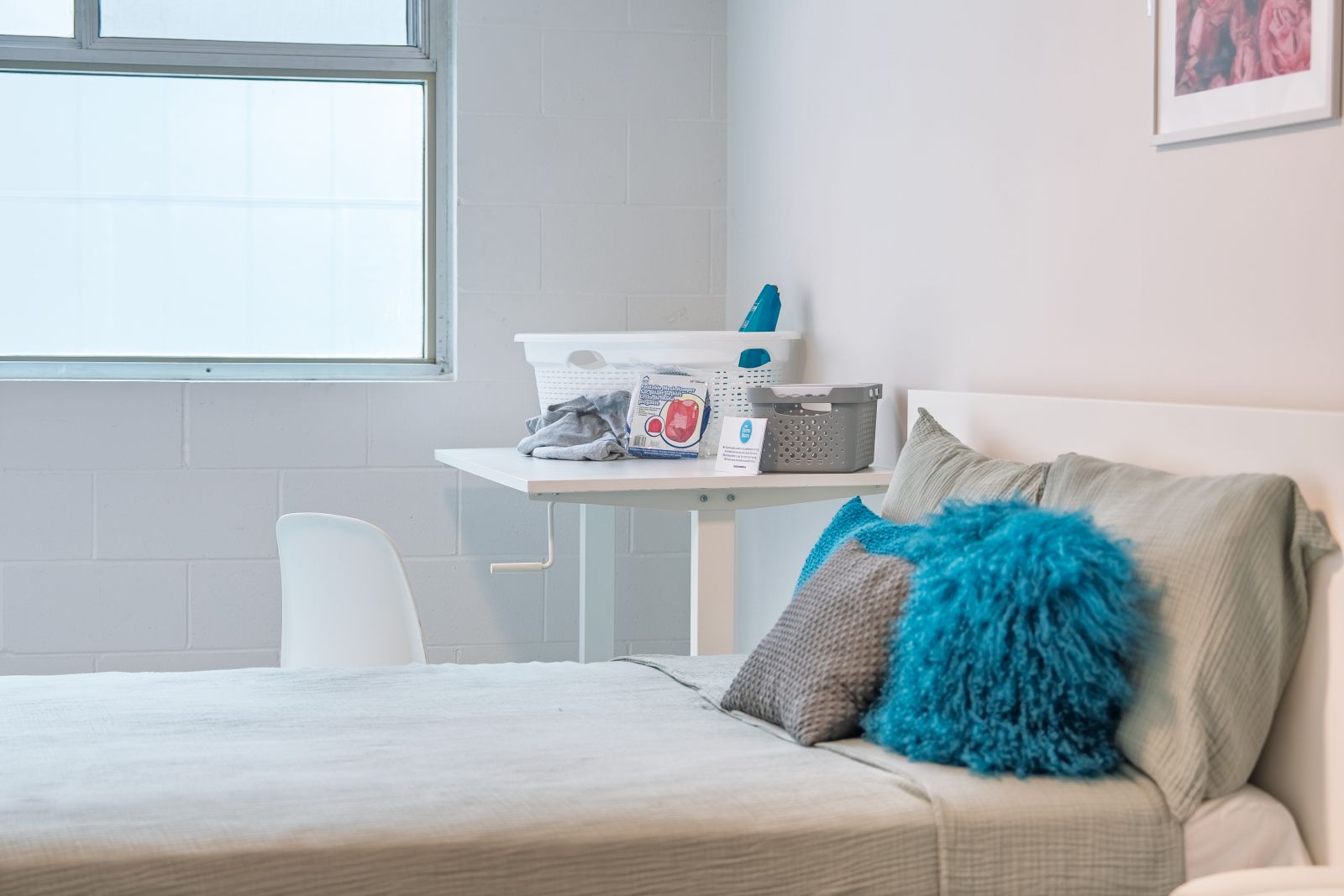
For the bedroom, bring bedding, pillows, hangers, a laundry basket, and a few personal items. For the bathroom, pack towels, toiletries, cleaning supplies, and any medication you use. Kitchen basics may include plates, cups, utensils, food containers, dish soap, and a few dependable meals for the first several days.
Try not to pack your entire life. Toronto apartments can have comfortable layouts, but extra belongings still take up space. Bring what you use, leave room to adjust, and buy remaining items after you have lived there for a week or two.
4. Build a School-Ready Setup
Pack your laptop, chargers, headphones, notebooks, backpack, calendar, and course-specific supplies in one clearly marked bag. Do not bury these items under bedding or kitchen boxes. Classes tend to begin quickly, and the first week is already busy enough.
Once you arrive, choose a consistent place for studying. It might be your desk, a community study area, or a mix of both. Keep a charger, pens, and a reusable water bottle nearby. This sounds basic, perhaps overly basic, but removing small distractions can make it easier to begin an assignment.
5. Prepare for Toronto Weather
Back-to-school season in Toronto can shift from warm afternoons to cooler, rainy days. Pack layers rather than relying on one type of clothing. A light jacket, comfortable walking shoes, umbrella, and weather-resistant bag are useful even if move-in day is sunny.
You do not need every winter item immediately, especially if you can retrieve or purchase things later. Still, plan for a proper coat, boots, gloves, and other cold-weather basics before temperatures drop. Students new to the city sometimes underestimate how much time they will spend walking between campus, transit stops, and shops.
6. Learn Your Everyday Route
Before classes begin, test the route from your apartment to campus. Walk it once, check nearby transit options, and note where you can pick up groceries, prescriptions, or a quick meal. The Avant location page can help you get familiar with the area before move-in.
It is also worth identifying a backup route. Construction, weather, and transit delays happen. Add key locations to your phone, but pay attention as you walk. You will feel more settled when the neighbourhood starts to look familiar rather than like a map you keep reopening.
7. Keep a First-Night Bag With You
Pack one bag that stays with you instead of going into the moving truck or deepest part of the car. Include identification, key pickup information, a phone charger, medication, toiletries, a change of clothes, basic bedding, water, and snacks.
This is the bag that saves you from opening six boxes at midnight because you cannot find your toothbrush. It is not glamorous, but it may be the most useful part of the checklist.
8. Handle Small Tasks During Your First Week
After moving in, take photos of your room and shared spaces, report maintenance concerns, learn how package delivery works, and introduce yourself to your roommates or neighbours. Set up a basic cleaning routine early. Nothing complicated—just enough to keep dishes, garbage, and shared spaces from becoming awkward conversations.
Update your mailing address where needed, review your class schedule, and create a simple weekly plan for meals, laundry, studying, and errands. Students living in Toronto apartments have a lot happening around them, which is part of the appeal, but a little structure makes it easier to enjoy the city without feeling constantly behind.
Key Takeaways
- Confirm move-in instructions, identification requirements, paperwork, and key pickup details before arrival.
- Review floor plans, virtual tours, and amenities before buying furniture or apartment supplies.
- Pack school essentials and first-night items separately so they are easy to reach.
- Prepare for changing Toronto weather and learn your route to campus before classes begin.
- Use the first week to organize your space, report concerns, and build a manageable routine.